
Laser Hair Removal for Dark Skin: Is It Safe?
Published: . Editorial review: . Bodyfree editorial policy.
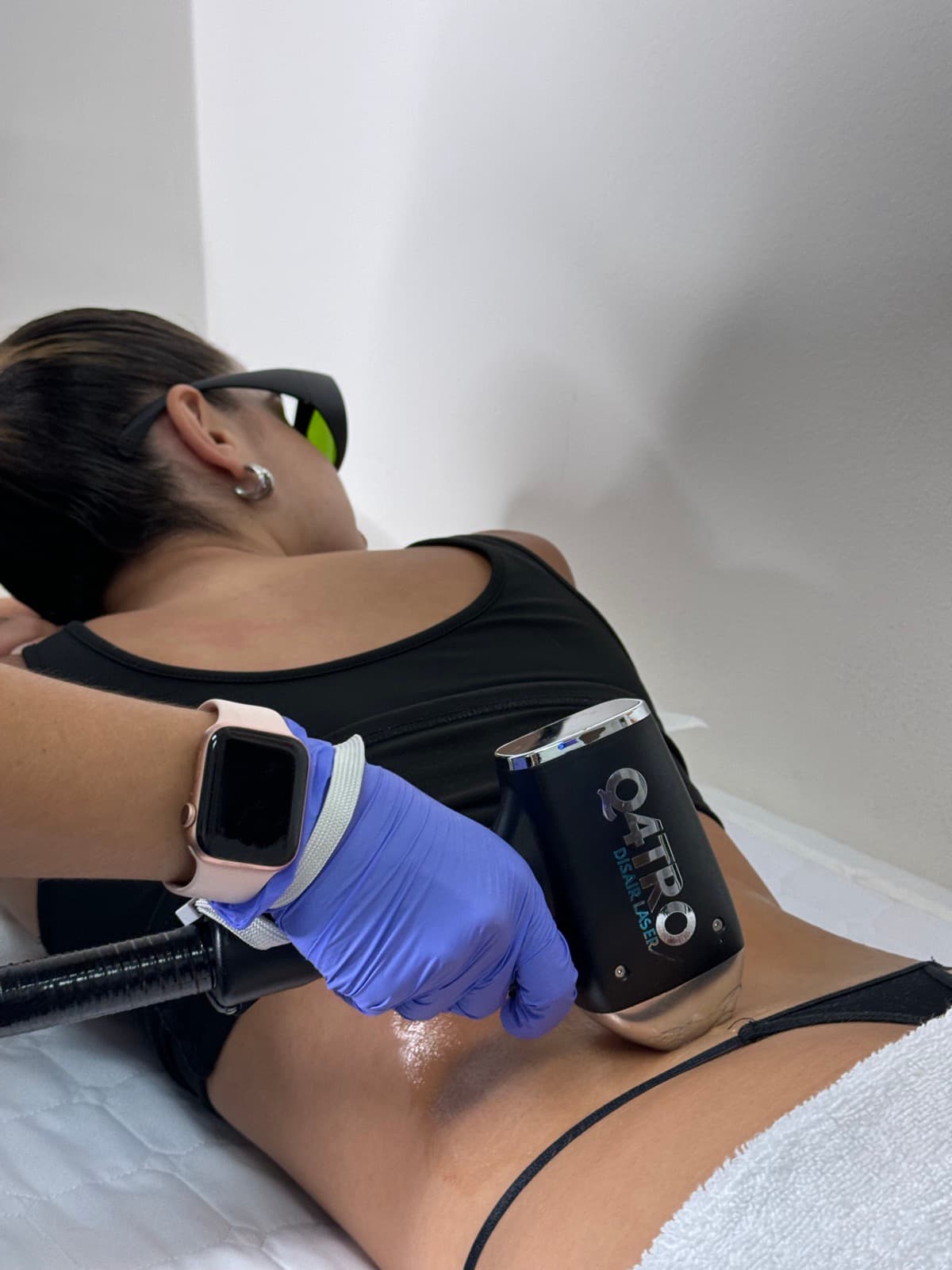
Dark skin can be treated with suitable laser equipment and an experienced practitioner. Your assessment should consider the treatment area, hair, medicines and skin history as well as skin tone. Recent tanning needs a separate discussion. Ask how the practitioner will assess your suitability and which risks apply to you.
Ask about the exact device
Four wavelengths are not the only approach to treating darker skin. Candela's Gentle Pro documentation describes 1064 nm Nd:YAG for skin types IV–VI. The relevant question is how the chosen device and settings fit your case.
Bodyfree uses Q4TRO, which combines four wavelengths. We assess your skin before deciding on treatment. A device description cannot replace that assessment or guarantee a specific result.
Discuss discoloration separately
Hair reduction is not a promise to remove dark patches. Tell the practitioner about previous marks or reactions, and seek medical assessment for unexplained skin changes. The ASDS guidance on hair removal recommends professional evaluation and experience with your skin type.
If you are visiting Panama
Tell us about recent sun exposure and planned beach days before booking. Your natural skin tone and a fresh tan are different considerations; treatment may need to wait.
Read the aftercare guide. Message us on WhatsApp to arrange an assessment in English at our Marbella clinic.
Editorial review: 11 September 2026. Public sources are linked where used. This guide does not replace an individual consultation. Results vary.
Frequently asked questions
- Is laser hair removal safe for dark and black skin?
- Dark skin can be treated with suitable equipment and an experienced practitioner after assessment. Ask about experience with your skin tone and the risks that apply to you. Recent tanning needs a separate evaluation and may mean delaying treatment. No device removes every risk.
- Can laser hair removal cause hyperpigmentation?
- Laser hair removal is not a skin-whitening treatment and does not guarantee removal of dark patches. Hair reduction may change the appearance of an area, but discoloration and dark dots have different causes. They need assessment, and laser itself can cause pigment changes as a side effect.
- Can I get laser hair removal with a tan?
- A recent tan needs assessment and may mean postponing treatment. Your natural skin tone and a fresh tan are different considerations. Disclose sun exposure, self-tanner or sunburn before your appointment. A device used across skin tones does not make every tanned area ready for treatment.
- Do at-home IPL devices work on dark skin?
- Home IPL devices can reduce hair if they are compatible with your skin and hair and used as directed. Check the exact model's instructions, permitted areas and restrictions. Some exclude very dark skin and certain light hair colours. An in-person assessment can help you discuss alternatives.